Posted by
 Judith Wright gives us a glimpse of the sublime
“Terror is in all cases whatsoever . . . the ruling principle of the sublime”
philosopher Edmund Burke, writing in 1757
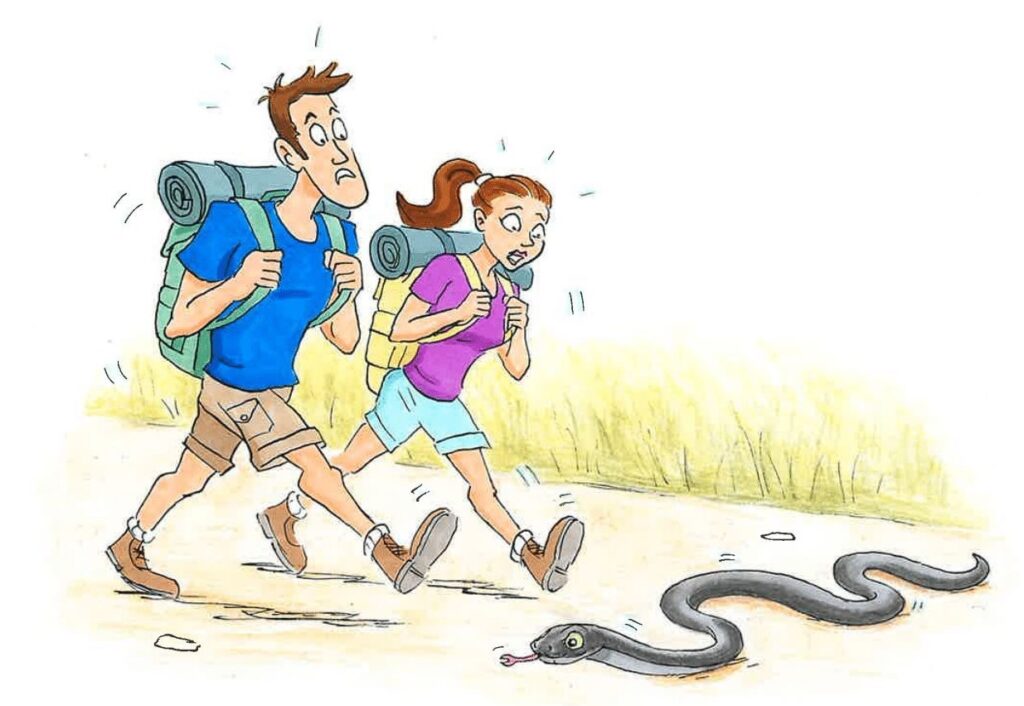
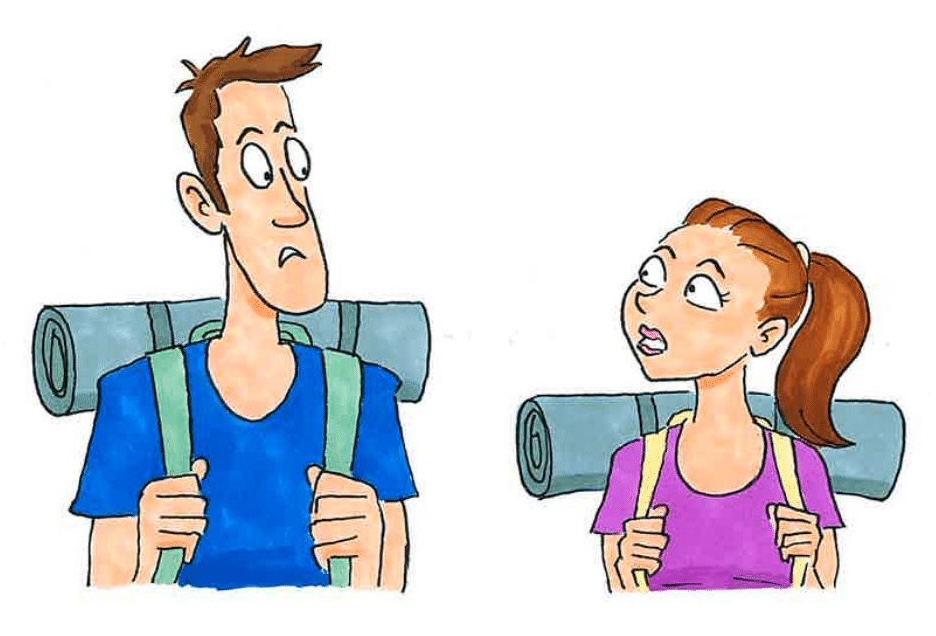
Australian poet Judith Wright wasn’t only a poet; she was an environmental and indigenous rights activist too. In 1962 she was one of four founding members of the Wildlife Preservation Society of Queensland, an organisation she led from 1964 to 1976. Under her leadership, this organisation campaigned on issues such as protecting the Great Barrier Reef from oil drilling and Queensland’s islands and beaches from sand mining. Her writing (for example, the Coral Battleground published in 1977) portrayed threats to Australia’s unique ecosystems. It’s partly into this context – and partly into one from much farther away, as we’ll later see – that we can place Hunting Snake, which was also published in 1964. It’s not a polemical poem, but it subtly-yet-strongly reminds us of nature’s ability to shake up an ordinary day, to give us a glimpse of something intangible-yet-powerful, invigorating and even threatening, through an unexpected encounter with one of Australia’s most emblematic natural denizens: a snake. A couple, out hiking one day in Australia’s famous outback, stumble across this splendid creature mid-hunt (the snake is hunting, not being hunted, despite the deliberate ambiguity of the poem’s title). They freeze in shock… but the snake is intent on its search for food and slithers by without giving them a second glance. The hikers pause for a moment, touched by the encounter in a way that’s hard to express, before continuing on their walk:
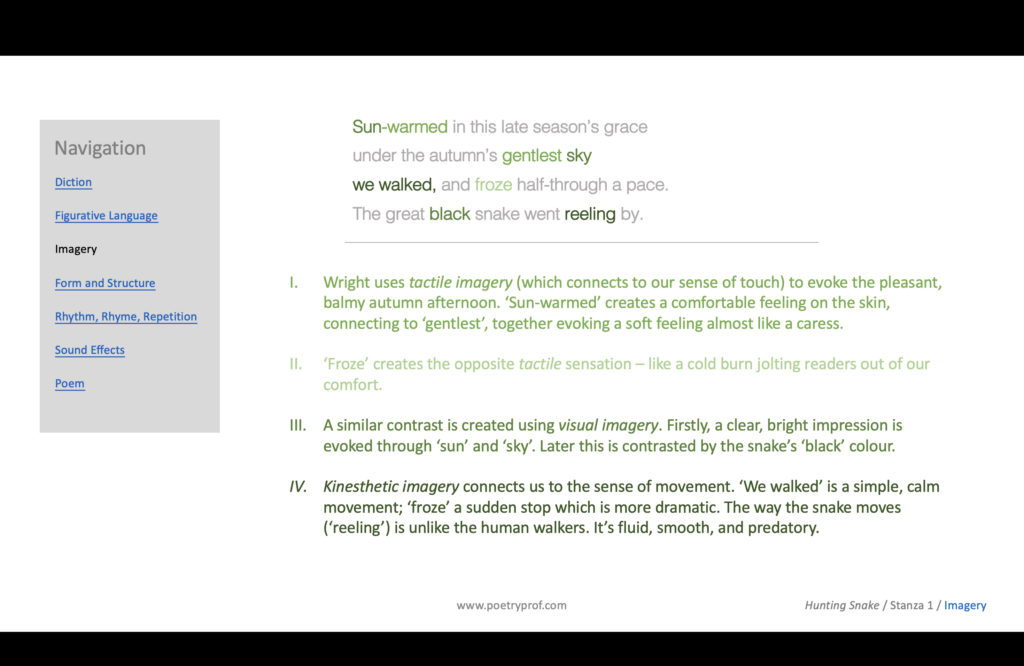
Sun-warmed in this late season’s grace
under the autumn’s gentlest sky
we walked, and froze half-through a pace.
The great black snake went reeling by.

Head down, tongue flickering on the trail
he quested through the parting grass;
sun glazed his curves of diamond scale,
and we lost breath to watch him pass.

What track he followed, what small food
fled living from his fierce intent,
we scarcely thought; still as we stood
our eyes went with him as he went.

Cold, dark and splendid he was gone
into the grass that hid his prey.
We took a deeper breath of day,
Looked at each other, and went on.
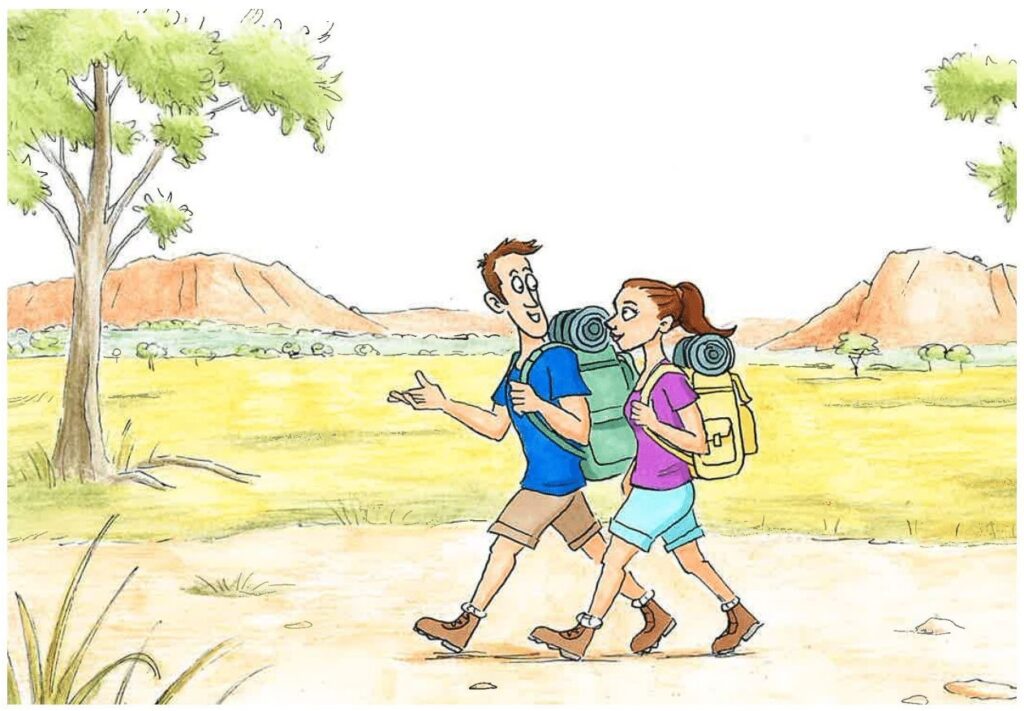
Wright’s pastoralism is easy enough to detect from the first lines of the poem where two hikers – one of whom is the speaker of the poem – are enjoying an autumn walk in the countryside. Contrary to common popular depictions of the Australian outback – remote, harsh, unforgiving – the environment they are in seems rather benevolent and kind. The couple are warmed gently by the sun which shines at a bearable temperature, not too hot, rather radiating warmth comfortably like a healing balm on the skin. The word gentlest suggests their surroundings cradle the two caressingly; it’s placed in the superlative which makes the day seems perfect, it couldn’t be more suitable for people to enjoy. By positioning the walkers under this gentleness, Wright depicts the sky spreading protectively like an umbrella shielding them from harm. In the first line, and elsewhere, Wright uses very slightly elevated diction, such as in the example of the word grace as a metaphor for the season or the day. Carrying faint religious connotations, this word makes it seem like being in this environment is a blessing, or that they are enjoying some sacred protection. The phrase late season reminds us that these moments of perfection are transient, over almost as soon as they start. Nevertheless, for the duration of this afternoon or early evening walk conditions are perfect, and the descriptions imply the speaker feels not only safe and protected, but invigorated simply by being in the great outdoors.
This innocent, bucolic scene is suddenly complicated by the shocking appearance of a great black snake that crosses the hikers’ trail. Intent on its own doings, the snake doesn’t notice the hikers – but they certainly notice the snake! Its entrance on-stage is marked by caesura in the form of a comma that interrupts the flow of the poetry right in the middle of the line. The jolt is impactful. Up until this moment, Wright’s poem had a gentle, almost beatific flow. Lines one and two neatly and smoothly enjamb (enjambment is created when one line of poetry flows uninterrupted into the next, unmarked by punctuation) and gentle sibilance (the S or soft C sound in words like sun, season’s, grace, gentlest, and sky) perhaps fooled readers into a false sense of safety. Rhythm and rhyme subtly work on our ears: the poem is composed in regular iambic tetrameter, and rhyming end words are ordered in an ABAB arrangement. The weak-strong, up-down, ‘de-dum de-dum’ patterns of these choices lull us into the relaxed rhythm of the hikers’ gait, left and right legs calmly covering the ground, an easy stride sufficient to enjoy this sunlit excursion. Unexpectedly, at the moment of the snake’s appearance, the smooth regularity of the poem is disrupted: sibilance takes on a sharper edge as S morphs into the Z of froze, giving the soft sound a harsher twist. The hikers’ confident forward movement is interrupted by this word too: froze sees them halting mid-step, cutting the relaxed flow of the poem and petrifying the scene. A contrast between movement and stillness is established here and is something that Wright will develop across the whole poem. While the snake is on-stage the human actors are paralysed: froze, still, stood and watched aptly convey their frozen passivity. By contrast, the snake is unperturbed and doesn’t let the human bystanders affect his ceaseless motion: flickering, pass, followed, and went (twice) are just a few of the many verbs that keep the snake flowing down the page while the humans stand rooted to the spot. This contrast sends a clear message; despite the benevolent scene it laid on in lines one and two, nature’s purpose is not for human benefit. There’s a world of creatures out there that call nature ‘home’ and exist in nature far more comfortably than we. In this regard, the use of sibilance in the first two lines – before the first appearance of the snake – can be understood not only as an auditory foreshadowing of the snake’s appearance (traditionally, sibilance can be used as an easy stand-in for a snake’s characteristic hiss) but as a subtle implication that this is the snake’s environment, not ours. We – not the snake – are the intruders to the scene.
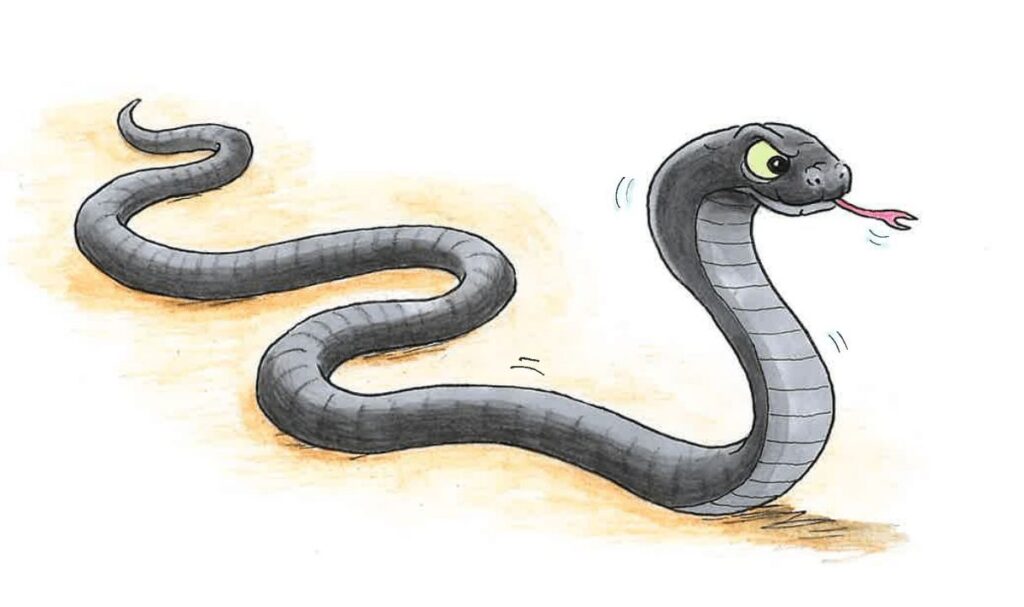
The snake itself is an exquisite poetic creation, rendered vividly in a mix of sensory imagery that almost defies categorisation. However you like to imagine when you read – straightforwardly through your eyes (visual), ears (auditory), hands (images that activate the sense of touch are called tactile) or even by movement (kinesthetic) – Wright’s got you covered. Beyond the visual (black, curves, head down, and so on) which people have a tendency to prioritise, we’ve already brushed up against more subtly wrought sensory imagery. For instance, sibilance is an auditory way of depicting the snake’s hiss, or the sound it makes as it slides through soft grass. But the auditory palette is far richer than sibilance alone; Wright’s imagery is always layered and varied. Alongside that sibilant hiss, for example, sits an occasional cluster of fricatives (made with the letters F and V) creating a leathery, feathery sound. What track he followed, what small food fled from his fierce intent is suffused with fricatives, which additionally conveys something of the friction between moving snake and the woodland surfaces it traverses (friction is a tactile sensation). Elsewhere, the snake’s slither is soundtracked by liquid W especially in the line our eyes went with him as he went which blends smooth liquid sounds into the visual image of the observers tracking the snake with their eyes, a touch of scooby-doo hijinks in the eyes being the only moving parts while the pair remain frozen mid-stride. Likewise, we’ve seen how Wright uses verbs (action words, verbs help create kinesthetic images) to convey the snake’s constant movement. An exquisite moment is where she chooses reeling, a verb that goes beyond describing movement by taking us into the essential quality of that movement. Like a silk ribbon unfurling in the wind, reeling suggests sinuousness, a whiplash flexibility, something of the snake’s muscular, back-and-forth slither. The word blends kinesthetic with tactile and even contains a touch of auditory imagery (liquid R and L creates fluidity as the snake slides effortlessly as water over stone). Other tactile words (diamond, glazed, scale, and cold) render the snake smooth and hard to the touch, like polished stone, not unpleasant, but resistant to penetration and deeper understanding.
It’s in this last comment that the symbolic possibilities of the snake start to bare their fangs. The snake is undoubtedly the poem’s central and most potent symbol, carrying Wright’s complex messages about the natural world and our relationship to it. An emissary of Mother Nature, its beautiful body and predatory intent are a study in contradiction. Seemingly carved by a gifted artist’s immaculate hand, sun glazed personifies the sun into the snake’s creator, depicting the creature as a clay sculpture taken out of the kiln, freshly applied finishing glaze glistening brightly in the light. Yet, just like a piece of art, the snake is passionless, emotionless, any sense of feeling merely a projection of the observer’s imagination. The first lines of the poem showed us an illusion of nature’s nurturing side, her warmth and capacity to rejuvenate. But Wright implies how benevolence masks nature’s implacable and unfeeling side; her fierce intent for the hunt, for instance, or her ruthless capacity for death. The opening two descriptions (‘great, black’) serve as our gateway to these messages, each word having a dual purpose. Great tells us about the snake’s large size, but also conveys strength and power that’s incompatible with human tolerance, such as one feels when trying to look directly at the sun. It’s a word we use when things are out of the ordinary. Black is, on one level, simply the main colour of the snake. But the word too carries suggestions of mysteriousness and unknowability – black is impenetrable – as well as danger and threat (later Wright will use the word dark which contains the same connotations). In stanza two, Wright describes the snake’s scaly skin as diamond, a word that lends itself perfectly to this layered analysis. On the level of denotation, the word describes the rhomboid, cross-hatched patterns of the snakeskin. On the level of connotation and metaphor, the word tells us this sighting is rare and precious, and such rare encounters might be coveted. More, diamonds are one of the world’s hardest substances, adding to the sense that the snake’s secrets cannot be easily uncovered. When combined with sun glazed, diamond adorns the snake with a dazzlingly beautiful decorative touch and puts it out of reach of the normal everyday. I don’t know about yours, but my day-to-day attire rarely drips with diamonds!
In this way, despite the vividness of her imagery, Wright always keeps us at an appreciative distance from the poem’s subject. Where her imagery draws us closer to visualisation, symbolism holds us at arm’s length. While we can marvel at the snake’s beauty, and recoil in fear at the danger inherent in stumbling over a snake hidden in the grass, ultimately we can’t penetrate it’s diamond armour to excavate the secrets inside. Nowhere is this clearer than when the focus shifts almost entirely onto the snake’s purpose: the hunt. The observers more than adequately describe the snake’s head down, flickering tongue… (as an aside, the phrase tongue flick/ ering on/ the trail/ squeezes an extra syllable into the word flickering, a little anapest – a measure of two lighter short syllables before a longer stressed syllable – that evokes the rapid fluttering of the snake’s tongue as it follows its prey’s scent). But these descriptions fall short of unlocking the snake’s interiority, or of articulating the full impact of the encounter upon the hikers. For instance, stanza three contains a repeated question: what track it followed, what small food… Yet the question remains unanswered, the snake’s prey is never identified and when it slips back into the grass its trail is lost. In another example of the elevated diction Wright likes to use, she describes the snake’s hunting like a quest (he quested), a metaphor that transforms finding food into a noble mission with an important or significant goal. Quested is a word from myth and legend; medieval knights quested after mysterious, unattainable, or sacred things, leavening the impression of the snake belonging to a realm distinct from the ‘ordinary’ walkers. When the snake disappears as quixotically as it arrived, the grass hid all traces of both hunter and quarry from sight; while not as important a symbol as the snake, the grass can be understood as a secondary force of nature, one that helps to conceal her mysteries from human eyes (in a previous mention of grass, it’s seen parting almost of its own volition, independent from human interference or involvement). All this is summed up in two moments that best encapsulate the distant relationship between the human observers to the snake. The first is we scarcely thought, a phrase implying not only nature’s power to transport people away from the mundane and predictable into a place of wonder, but also closing the door and locking the key on the snake’s secrets. The phrase provides no solution or comprehension, suggesting that deep understanding of the workings of nature is impossible. The second is at the end of the poem, where the hikers simply looked at each other, not sharing any words, unable to express what it is they are thinking and feeling. While having a profound impact on them, such as being invigorating in the way that a brush with danger can be – they took a deeper breath of day as if the encounter has made them more appreciative of life – nevertheless, the full import of the meeting with the snake remains ambiguous and abstract, something felt only in an intangible way. Wright implies encounters with nature are wont to be profound yet highly ambiguous.
Regular readers of eighteenth and nineteenth century Romantic poets will appreciate what Wright has achieved here and, despite being written two-and-a-half centuries and halfway around the world from where Romanticism originated, Hunting Snake deserves a place in the historical halls of Romantic poetry. Through the philosophy of Edmund Burke and later Romantic writers such as Wordsworth, Coleridge and Blake, the idea of encountering things that are powerful, vast, unknowable, and potentially dangerous gave rise to the concept of the sublime, which is an experience that evokes wonder, admiration… and no little fear. Unlike seeing things which are simply beautiful (such as a flower), encountering the sublime involves a brush with danger, darkness, and mystery as well as natural beauty. The sublime has a dual effect of lifting us out of ordinariness – but also reminding us of our own mortality and insignificance at the same time. The snake is a perfectly wrought sublime symbol: not only is it stunning, a magnificent thing to see, it’s also mysterious and threatening. For instance, the odd little phrase fled living reminds us that its intention is to kill. Its appearance takes the observers out of themselves; their bodies and minds are awestruck, we froze, which is the expected reaction to experiencing the sublime. They are unable to consider the snake rationally and can react only instinctively (our eyes went with him as he went). In The Prelude, one of Wordsworth’s most famous poems, a boy rows across a lake and suddenly becomes aware of a mountain looming over him. The mountain is neither evil nor benevolent – it simply exists, and the boy recognising its existence inspires and overwhelms him at the same time. The snake is Wright’s version of Wordsworth’s mountain. The snake neither threatens nor attacks the human observers; in fact it doesn’t acknowledge their existence at all. While the poem ends as it began as the walkers simply went on, yet the encounter with the snake alters their perception of the world in an intangible and indefinable way. Wright uses subtle poetry to imply this unseen shift: for example, in the final stanza the rhyme scheme moves from ABAB to ABBA, the altered pattern registering in the ear to suggest something – even something indescribable or intangible – is not the same as it used to be. Concurrently, patterns of sound shift too. Where light sibilance and fricative have characterised most of the poem, the final verse has a far heavier heft of sound. Hard guttural C and G (cold, dark, gone into the grass) combines with heavy dental D (dark, splendid, deeper, day) and plosive B and P (splendid, prey, deeper breath) to imply the unseen weight that settled briefly over the hearts of the human observers, disrupting the peaceful equilibrium of thier lives.
Perhaps the phrase that best sums this up is the final stanza opening tricolon: cold, dark and splendid. Presented in a rhetorical pattern of three that calls attention to itself, these words encompass the totality of the snake’s symbolism. Cold tells us not only of its implacable focus on its hunting quest, but further suggests its indifference to humanity and obliviousness to human concerns. The snake’s not evil, but it’s not benevolent either, the same as any other aspect of nature (despite what the kindly autumn weather might trick us into believing). Dark (like black) hints at exotic beauty and essential unknowability at the same time. Splendid harkens back to great, connoting how its beauty is elevated and otherworldly; it’s a word we use when things are out of the ordinary range of our everyday experiences. The combination of the three verges on the paradoxical. A brush with the wild ‘other’ has given the human observers – and us readers – a glimpse into a world both uncanny and unsettling, something outside of our normal, daily concerns, a fleeting glimpse that’s gone all too quickly. Hunting Snake gives us a glimpse of the sublime.

Suggested poems for comparison:
- The Tyger by William Blake
Another famous symbol of the sublim can be found in this perennial childhood favourite by Romantic master William Blake. You can probably recite the first couple of lines by heart: Tyger, Tyger burning bright in the forest of the night. But when we get to the line: Who framed thy fearful symmetry?, we see Blake’s admitting that his majestic animal is as much a mystery as Wright’s diamond-scaled snake: beautiful, terrible, and ultimately unknowable.
- Request to a Year by Judith Wright
Anthologised in the same Songs of Ourselves collection as Hunting Snake, in this poem the mighty Swiss Alps form the backdrop to a family drama played out in Wright’s great-great-grandmother’s time, and immortalised in a sketch she made of the day.
- Snake by D.H. Lawrence
Lawrence’s depiction of a slim black snake that descends to drink from his water trough is incredibly rich and evocative. The sighting provokes an intense internal conflict in the speaker, between his natural inclination to adore his sublime visitor and his taught instruction to kill venomous snakes. An absolute gem of a poem.
Additional Resources
If you are teaching or studying Hunting Snake at school or college, or if you simply enjoyed this analysis of the poem and would like to discover more, you might like to purchase our bespoke study bundle for this poem. It costs only £2.50 and includes:
- Study questions with guidance on how to answer in full paragraphs.
- A continuation exercise to help you practise analytical writing.
- An interactive and editable powerpoint, giving line-by-line analysis of all the poetic and technical features of the poem.
- An in-depth worksheet with a focus on explaining so you can unpack how sensory imagery is crafted in the poem.
- A fun crossword quiz, perfect for a starter activity, revision or a recap – now with answers provided separately.
- A four-page activity booklet that can be printed and folded into a handout – ideal for self study or revision.
- 4 practice Essay Questions – and one complete Model Essay for you to use as a style guide.
And… discuss!
Did you enjoy this explanation of Judith Wright’s modern Romantic masterpiece? What symbolic ideas did the snake present to you? Did you notice more ways Wright evokes the snake’s form and movement through poetry? Why not share your ideas, ask a question, or leave a comment for others to read below.