Posted by
 Strap on your skates and go play on the ice in this passage from the poem William Wordsworth never finished writing

“It is, in essence, an autobiographical epic, elevating his thoughts, feelings, and growth to the level of myth…”
Benjamin Voigt, William Wordsworth101
William Wordsworth is a household name in the history of poetry. Sooner or later any student, especially of English poetry, is going to encounter this literary leviathan. He’s one of the big ones, his name breathed into the same rarefied air as Shakespeare, Milton, William Blake. He’s most famous as a founder of English Romanticism. Along with his friend Samuel Taylor Coleridge, his grand poetic project was to make poetry, well… less grand. Previously, the Augustan tradition had determined poetry’s scope and scale: classical culture, aristocratic subjects, clever and witty constructions that passed above the heads of ordinary readers. Reason, satire, and the highly controlled poetic form was paramount. Wordsworth and his companions changed all this by challenging Augustan values and redefining what poetry ought to concern itself with. They angled their writing towards the ordinary and everyday. Individual experiences, universal emotions, and the spiritual power of nature all became worthy topics for the poet’s pen. Take this passage from The Prelude as a case in point. The event itself is remarkably ordinary: Wordsworth remembers going skating with friends after dark. Yet the way he relives this experience elevates its significance. For Wordsworth, the development of individual consciousness was the most profound poetic subject and the interaction between nature and his own developing identity a source of interest and inspiration. So he depicts his evening’s escape as a formative experience, the break with routine as something liberating for his childish self, the winter snow not just fluffy background scenery but the chief element that helped inspire his emerging imagination:
And in the frosty season, when the sun
Was set, and, visible for many a mile,
The cottage-windows through the twilight blazed,
I heeded not the summons: happy time
It was indeed for all of us; for me
It was a time of rapture! Clear and loud
The village-clock tolled six – I wheeled about,
Proud and exalting like an untired horse
That cares not for his home. – All shod with steel
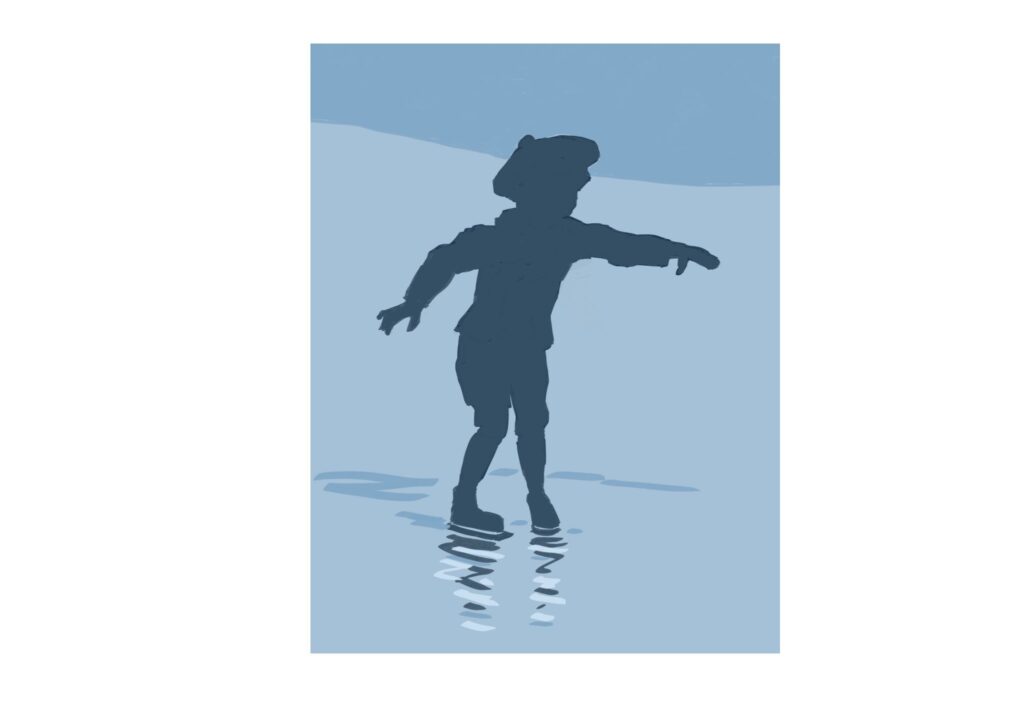
We hissed along the polished ice, in games
Confederate, imitative of the chase
And woodland pleasures, – the resounding horn,
The pack loud-chiming, and the hunted hare.
So through the darkness and the cold we flew,
And not a voice was idle: with the din
Smitten, the precipices rang aloud;
The leafless trees and every icy crag
Tinkled like iron; while far-distant hills
Into the tumult sent an alien sound
Of melancholy, not unnoticed while the stars,
Eastward, were sparkling clear, and in the west
The orange sky of evening died away.
The 22 lines you’ve just read are extracted from a much longer poem that Wordsworth began in 1798 and continued writing in earnest until 1805. The poem was never truly completed; he would return to it throughout his life to make edits, revisions, and add more chapters. The Prelude is autobiographical but its subheading (Growth of a Poet’s Mind) tells us it’s about much more than narrating the events of his life. Through thirteen books (fourteen in the revised 1850 edition!) Wordsworth traces the development of his own consciousness, examining how childhood memories, education, and his relationship with his surrounding environment created one of the most important poets who ever lived. Born in England’s beautiful Lake District, for Wordsworth nature was a living presence, a companion, and a strict teacher. Throughout The Prelude, mountains, rivers, lakes, forests, seasons, and even the weather teach lessons far beyond that of formal schooling. In one of the most famous episodes, he remembers stealing a boat and rowing out onto a lake. At first he is exhilarated; then a mountain peak looming out of the mist fills him with dread and fear. This experience became a lesson in humility that Wordsworth never forgot. It helped cultivate his belief that if children can be receptive to nature they can enter a world of wonder and imagination that, even after they mature, can be returned to and revisited. The Prelude does just this; the adult Wordsworth revisits the ‘spots of time’ that remain alive in his memory, examining and reinterpreting how they nourished his development.
The particular spot of time that forms the passage you’ve just read comes from Book 1, subtitled Childhood and School-Time. It occurs in a sequence where Wordsworth’s recalling long childhood winters, snowfall cutting the Lake District off from the rest of the country and marooning him in the cold and dark. From the off, Wordsworth describes winter as the frosty season, a phrase that doesn’t shy away from how inimical winter can be. Images of leafless trees appear skeletal and icy crags lie await in the darkness to shred the unwary with sharp, rocky edges. Wordsworth never pacifies nature or sanitises the threat of the darkness and the cold. Yet, strangely, children in the poem aren’t intimidated by winter’s hardships. No coddled youth, they embrace challenge and run off enthusiastically to skate on the frozen lake. Described as all shod with steel, the simple wearing of skates is depicted as a donning of armour, the word shod an example of elevated diction that transforms playing in the snow into an adventure or exploration through which Wordsworth discovered not only the world around him but resourcefulness and resilience within himself as well. Nowhere can this grandiloquent tone be heard more clearly than in a phrase that encapsulates young Wordsworth’s whole attitude towards winter. Where others might be discomforted by the frigid cold, he calls it both a happy time and a time of rapture, the latter phrase especially containing something of hyperbole. Meaning ‘a feeling of intense pleasure or joy’, the word rapture has connotations of transcendence as, according to some religious teachings, believers will be transported to Heaven upon the second coming of Christ. The word conveys an extreme of sensory experience, turning his experience of winter into something euphoric or ecstatic. So when a newly frozen lake beckons with the chance to practice ice-skating, Wordsworth and his friends can’t resist the call to adventure.
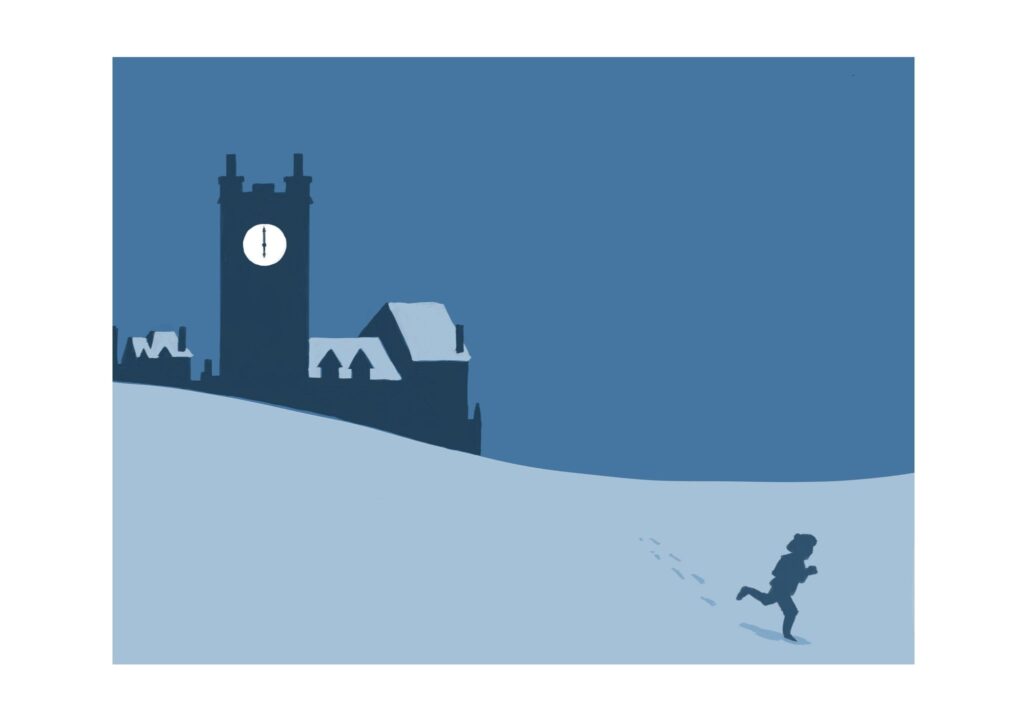
Opposing winter’s call is the human world of comfort, safety and security symbolised by cottage-windows which, visible for many a mile, blazed an appealing light through the darkening evening to advertise warm fires, cooked food, and soft beds. The word blazed is both visually bright and tactile in creating an image of warmth and safety waiting inside; yet young Wordsworth has no trouble turning his back on these promised comforts and heading out into the night. The twilight setting not only creates an appealing atmosphere but also suggests an in-between time that’s neither day nor night. It backdrops a decisive moment that could go either way, where he must choose between the domesticity and security of human civilisation… or the freedom and danger of the natural world. Ignoring the call of home implies Wordsworth’s youthful attraction to nature’s wild and imaginative realm where some of life’s most important lessons occur beyond the safety of protective boundaries. In this way, the twilight time also mirrors young Wordsworth himself; he’s moving from childish innocence towards a greater understanding of the world and his place in it, a theme of The Prelude as a wider work. The manner of his rejection is suitably epic: I heeded not the summons uses reverse syntax (heeded not rather than ‘did not heed’) combined with elevated diction (heeded is a formal way of saying ‘to obey’; a summons is an almost legalistic word meaning ‘an order one should not refuse’) to imply the boy choosing to skip dinner and go skating with his friends is a significant act of rebellion, a major break with normal convention. Twinned with the cottage-windows is the symbolism of the village-clock representing not just conventional security and comfort, but adult control as well. The word tolled, meaning to sound the time, is another example of the elevated diction Wordsworth uses throughout this passage. A ‘toll’ is a deep, resounding chime that imbues the clock’s bell with authority. Embellished with dual adjectives clear and loud, the child’s rejection of home is even more impressive given the weighty way the summons is made. Instead of a simple ‘turn around’, Wordsworth describes I wheeled about, choosing a phrase that conveys excitement, eagerness and determination. He remembers feeling proud and exalting at this exact moment, diction that once again transforms childish curfew-breaking into a heroic triumph of individuality over convention as Wordsworth and his friends ignore the warmth of home and head in the opposite direction – out into the wild.
From this decision on, Wordsworth shows how immersion in nature invigorates and stimulates not only the body but the mind as well. At the moment of choosing the natural world over the human one, Wordsworth describes himself as an untired horse that cares not for his home. The extended simile reveals the depth of the child’s commitment to his decision; the horse has no wish to return to the comforts of his stable and instead throws himself into exploration and play. A horse is a noble creature, strong and vigorous, and the adjective untired suggests impressive reserves of stamina on top of this. Again, symbolism is an important component of the poem. Through equine comparison, Wordsworth associates himself with nature and further distances himself from the civilised world of clocks and glass windows. Too, a simile is a comparison between unalike things that share hidden similarities. To see oneself as a horse necessitates imagination; its position in the poem (after the choice to immerse oneself in nature has been made) implies imaginative development as a reward for the boy’s bravery. It might be safer and certainly warmer tucked up in a cosy cottage – but it’s also conventional and unchallenging. The conscious choice of freedom over safety is the first step in embracing the spontaneity that Wordsworth believed was crucial to forming his poetic self. Therefore, the untired horse is more than a celebration of youthful strength and vigour; it represents the belief that encounters with nature stimulate the growth and development of the mind as well.
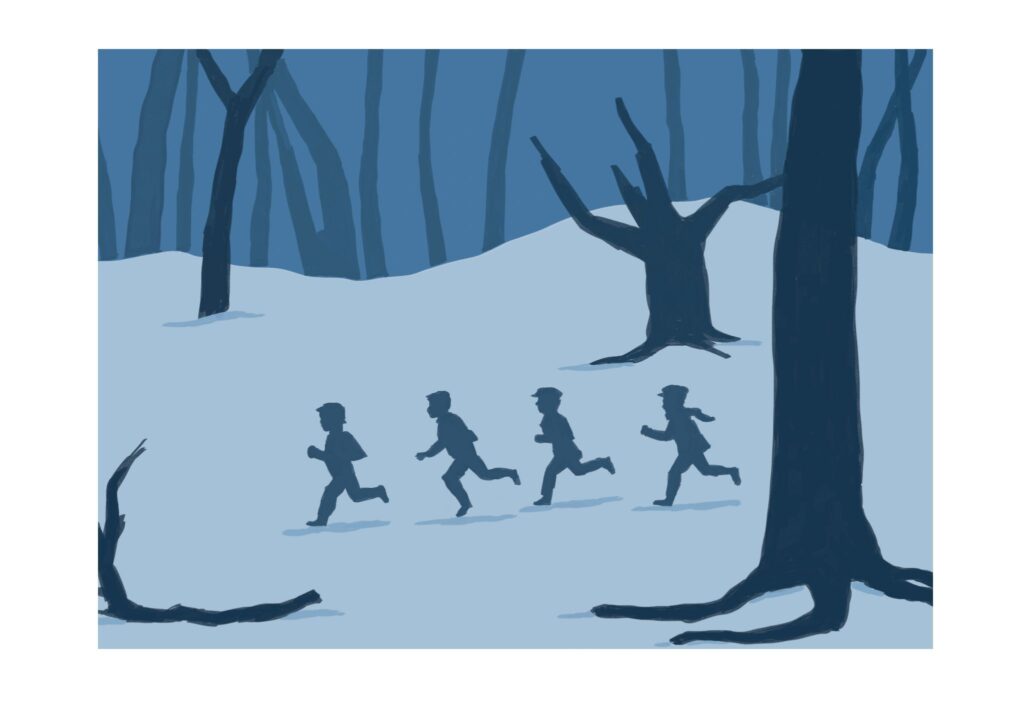
And this isn’t the only benefit of throwing off the shackles of conventional education and embracing a riskier path. Wordsworth shows how reward extends beyond personal growth. There’s a shift from inward- to outward-looking as the whole poem moves from a narrow, parochial village setting to a vast expanse of icy crags and gaping precipices. Just before ending, like one of those cinematic crane shots that pulls the perspective back impossibly wide, Wordsworth describes a vista of countless stars… sparkling clear, an image that couldn’t do much more to imply his horizons have been comprehensively broadened after stepping away from the comforts of home. Concurrently there’s a growing appreciation that his individual experience is part of a collective experience. First seen in lines 4 and 5 (happy time it was for all of us; for me it was a time of rapture), here the impression is of the speaker delineating himself quite clearly from others. The line just quoted uses caesura (a deliberate break in the middle of a line of poetry, here made with a semi-colon) to separate us from me, to separate a personal from a collective response. This distinction fades out on the ice. All shod with steel presents the children as a unified group and we hissed along the polished ice replaces I (a word that won’t be seen again in the poem) with the plural pronoun we. Another one of those elevated word choices, confederate, drives home the idea of communality: meaning ‘joined by a treaty,’ confederate pictures the boys allied together in their playful exploration of the world. In the poem’s most bravura image, Wordsworth remembers himself and his friends acting out a traditional hunt. Some play the part of a pack (another collective word) of dogs and horses; others play the hunted hare. Whether chasing or being chased, though, all the children’s voices commingle into a joyous sound that mimics the traditional hunting horn. Loud-chiming expresses the group’s relationship in musical terms. Where one might imagine a gang of kids free from parental supervision to be obnoxiously raucous, the poem paints an auditory picture of them harmonising pleasantly together. Later, not a voice was idle uses negation to tell us that nobody is left out of the fun; all participate so that the opening of a single boy’s mind inspires a positive chain reaction among everyone who ventured out into the dark that night.
Where the poem presents human relationships as self-sustaining (the more time the children spend playing together the closer their bond becomes) noticeably such a harmonic and mutually beneficial relationship extends to the one between the children and the natural world as well. The idea is subtly introduced through the action of skating on the frozen lake where the coming together of children and nature results in accentuated beauty; the already smooth surface of the ice is polished to a further shine by the group’s passing. The onomatopoeic hissed describing the friction of skates on ice harmonises with natural sounds, most obviously a snake’s hiss, but also gusts of wind or rustling leaves. The word contains sibilance that Wordsworth extends through this line (polished ice) and laces liberally elsewhere: frosty season, sun was set, blazed, shod with steel all contain the characteristic S, SH or Z that, when repeated, evokes the seductive appeal of the winter snow to the adventurous kids. The way Wordsworth layers sibilance with other types of consonance and assonance creates a soundscape of physicality, speed, woodland life, and imaginative play. Hunted hare, for instance, uses aspirant H to give us the image of breath expelling into cold winter’s air. Wheeled and steel use a longer EE sound expressing a sense of freedom from constraint; a light and playful i evokes the crystalline beauty of the winter scene – find it in phrases like visible for many a mile and every icy crag tinkled like iron and more besides. One of the poem’s most understated yet important phrases is woodland pleasures which might be used to summarise Wordsworth’s entire poetic ethos in that children’s enjoyment and imaginative development is linked explicitly with the natural world. For Wordsworth, pleasure in nature stimulates and grows our physical, mental, and emotional faculties all at once.
Actually, it’s in the poem’s auditory imagery that the reciprocal relationship between the young friends and the landscape is most potently developed. Through sounds that reverberate, echo, and ricochet from rocky precipices and icy surfaces, Wordsworth heavily implies the back-and-forth, call-and-response of two-way communication between the children and their surroundings. Traces can be seen (heard) in the imitative hunting horn described as resounding, a word that suggests the landscape not only amplifies but re-articulates human voices in the air around them. There’s a faint personification of the landscape that suggests it is an entity capable of being impacted and affected by this intrusion, such as in the phrase with the din smitten, an interesting word that has connotations of love and infatuation (one can be smitten with a crush) but which can also be used to express musicality: in blacksmithing ‘to smite’ metal is to strike it with a hammer, an action that produces a resounding ringing sound. When the precipices rang aloud, Wordsworth is imagining the landscape calling back to the children in answer. As his children pass through the landscape, they start to dialogue with it and it’s in this interaction that magic begins to happen. Several times, the distinction between child and nature almost collapses. The previously mentioned untired horse simile is one such moment, as is the extended image of the boys acting out their animalistic hunt. There’s a curious metallic meshing between the clamour of steel skates (themselves an approximate mirror of horseshoes) and the return echo tinkling like iron that seems to blend children and landscape together, this latter phrase another example of the delicious auditory imagery that makes the winter scene so interactive in feel, as if returning musical cues received from the children back to them. At one point the children are so in tune with their environment that they seem to defy gravity and take off from the page: So through the darkness and the cold we flew. Rather than ‘ran’ or ‘raced’, the choice of word flew is more bird-like than horse, implying the power of nature to transport the children into a world of complete make-believe. At such moments it feels like they have truly become one with the natural world.
And yet, before we get too carried away, Wordsworth undermines the balanced poise between children and landscape. Previously their reciprocity seemed perfect: the children created their din, nature heard it and sent an answer back. But then, suddenly, distant hills into the tumult sent an alien sound of melancholy. A strange, foreign note disrupts that harmony. Alien is a deliberately destabilising piece of diction. It connotes otherness, un-belonging, some unknowable thing. This new sound is a reminder that some of nature’s lessons will remain unlearned, no matter how closely we listen to her teaching. Where the children’s imagination had seemed boundless (they transformed themselves into horses, a hunting pack, the unfortunate hare, and even flew like birds) now they run up against something that is beyond their ken.
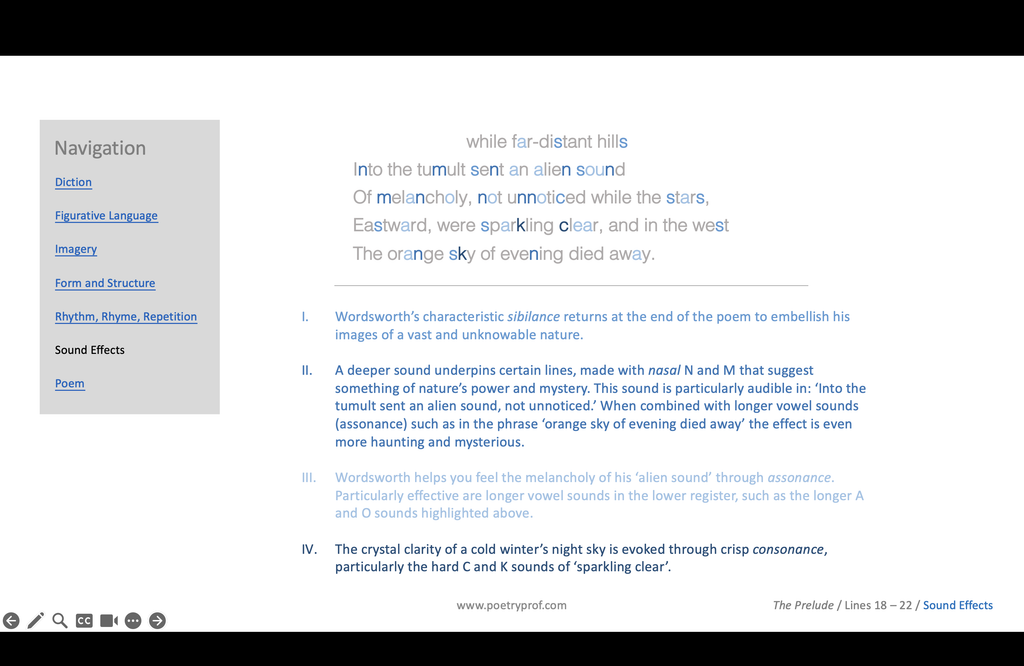
Perhaps it’s wrong to say ‘run up against’ as, throughout this extract from The Prelude, distance has played a part in understanding. The children’s harmony developed through close proximity, hanging out together allowed familiarity to grow between them to the point where they could spontaneously improvise their play. The nearby landscape communicates in a language children can understand (tinkling like iron echoes their steel-shod twinkle-toed skating, for instance), suggesting what is familiar can be comprehended and internalised. But the further Wordsworth extends outwards, the more mysterious the return echoes become. The alien sound of melancholy cuts across his rapture, introducing a contrasting emotion that he is not feeling and cannot decode. Therefore, it would be wrong to say that nature merely reflects the children’s feelings, or vice versa. While the sound is not unnoticed, it is also not understood. In this way the poem leads into a contemplation of the farthest possible landscape as the orange skies of evening died away. By the end, the poem takes us to the edges of human experience – the enormity of space, the unknowable realms of the dead – and asks us to acknowledge that some things will forever lie beyond our grasp.
This moment clarifies Wordsworth’s complex reinterpretation of skating on the ice so many winters ago. The natural world is not only beautiful, stimulating, and energising. It’s also terrifying and awe-inspiring. The Prelude gives us an encounter with something that cannot be understood and, in doing so, a brief-but-powerful experience of the sublime.
Suggested poems for comparison:
- Lines Composed Above Tintern Abbey by William Wordsworth
Thought by some to be Wordsworth’s best poem. Tintern Abbey is a place on the English and Welsh border. Five years after visiting, Wordsworth put his deep feelings into this ode. Addressed to his sister (and sometime collaborator) Dorothy, Wordsworth explores the psychological effect of the landscape on his mind and being.
- Hunting Snake by Judith Wright
For a perfect sublime symbol, look no further than Wright’s poem about a couple who’s hike in the wilderness brings them into contact with a magnificent black snake. Beautiful and terrifying in equal measure, the snake demonstrates nature’s two sides: its capacity to inspire awe and dread at the same time.
- There Will Come Soft Rains by Sara Teasdale
An excellent read along with this passage from The Prelude. Both Wordsworth and Teasdale write lyrical poetry that is beautiful and sensory. Like Wordsworth’s ‘alien’ sound, Teasdale imagines a natural world that exists entirely outside human understanding and has no interest in us either.
Additional Resources
If you are teaching or studying this passage from The Prelude at school or college, or if you simply enjoyed this analysis of the poem and would like to discover more, you might like to purchase our bespoke study bundle for this poem. It costs only £2.50 and includes:
- Study questions with guidance on how to answer in full paragraphs.
- A continuation exercise to help you practise analytical writing.
- An interactive and editable powerpoint, giving line-by-line analysis of all the poetic and technical features of the poem.
- An in-depth worksheet with a focus on explaining how Wordsworth employs enjambment, caesura, and lineation in the poem.
- A fun crossword quiz, perfect for a starter activity, revision or a recap – now with answers provided separately.
- A four-page activity booklet that can be printed and folded into a handout – ideal for self study or revision.
- 4 practice Essay Questions – and one complete Model Essay for you to use as a style guide.
And… discuss!
Did you enjoy this explanation of William Wordsworth’s sublime passage? What do you sense in the relationship between the children and the world they inhabit? Do you agree that the development of the mind depends on staying open to things outside ourselves and beyond understanding? Why not share your ideas, ask a question, or leave a comment for others to read below.