Posted by
 Language can both hurt and heal in Sujata Bhatt’s challenging poem about India’s past – and the place it could be again
“How could we think about what India would have been like… had British rule not occurred at all?”
Amartya Sen, Illusions of Empire
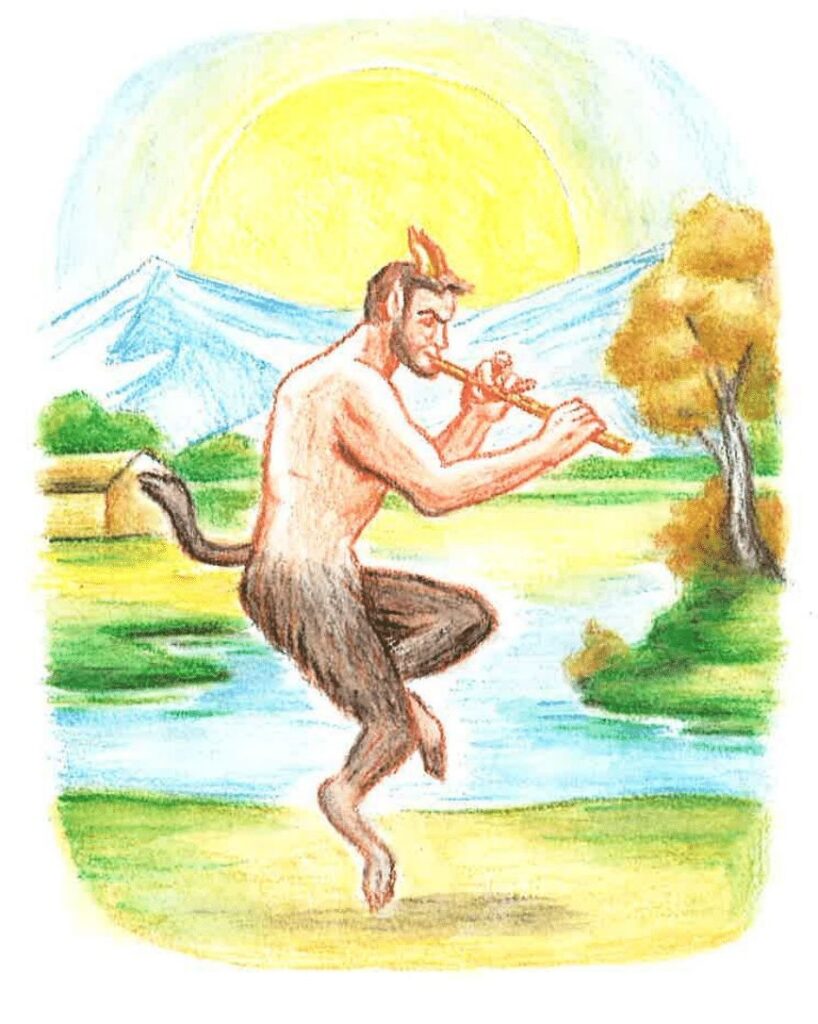
The first line of A Different History lands with the force of a truth discovered: Great Pan is not dead. While in the Christian tradition, God is eternal and cannot die, this has not always been true for Gods from other cultures. According to the Greek scholar Plutarch, Pan – god of wild places, shepherds, folk music (Pan is often depicted playing his iconic panpipes), and country dancing – did actually die. In a legend from the 1st century, news of Pan’s death came by word of a sailor, Thamus, who heard a ‘divine voice’ as he crossed the ocean. “Thamus, are you there?” the voice is reputed to have called. “When you reach Palodes, take care to proclaim that the great god Pan is dead.” It’s thought that this story prefaced the emergence of Christianity and the concurrent shift away from pagan beliefs in Europe. Bhatt’s allusion to the story of Thamus prefaces a subtle critique of colonialism in India. Her poem takes us back in time to glimpse traditional Indian thought and religious belief, where daily practices (such as the way a book should be treated with reverence and care) reveal non-Christian-centric values. In other words, Pan is not dead, he simply emigrated to India, a place that still gives tangible expression to older ideas:
Great Pan is not dead;
he simply emigrated
	to India.
Here the gods roam freely,
disguised as snakes or monkeys;
every tree is sacred
and it is a sin
to be rude to a book.
It is a sin to shove a book aside with your foot,
a sin to slam books down
	hard on a table,
a sin to toss one carelessly
	across a room.
You must learn how to turn the pages gently
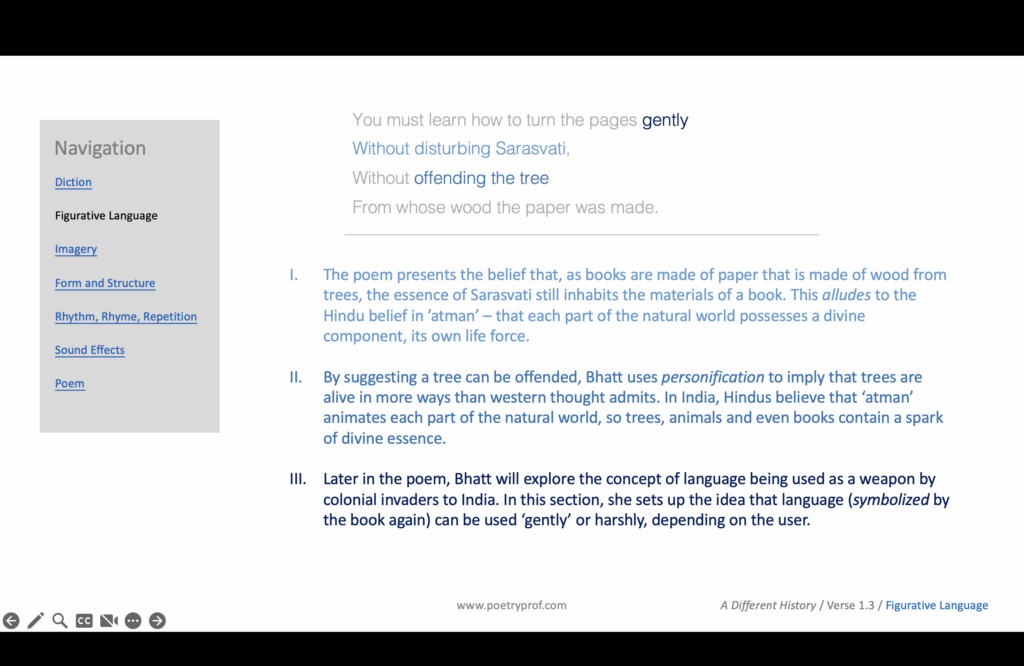
without disturbing Sarasvati,
without offending the tree
from whose wood the paper was made.

	Which language
        has not been the oppressor’s tongue?
        Which language
        truly meant to murder someone?
        And how does it happen
        that after the torture,
        after the soul has been cropped
        with a long scythe swooping out
        of the conqueror’s face –
        the unborn grandchildren
        grow to love that strange language.
The title of A Different History sets out Bhatt’s ambition to help us imagine a different world far back in time where pantheism (the worship of many gods) in India wasn’t pushed aside by a monotheistic religion (here’s looking at you, Christianity). In Greek, the word ‘pan’ means ‘all’ and is the root of the word ‘pantheon’, meaning all the gods of religions such as Hinduism. In Bhatt’s eyes, India is an Arcadian paradise, a place where gods roam freely, disguised as snakes and monkeys. In Christianity, it is taught that God lives eternal and created the world to be separate from him. While Christians believe they are made in God’s image and can even hear God’s voice, they don’t believe that they carry a piece of God around inside them; he remains distinct and separate from his creations. This contrasts with Hindu beliefs which teach that every human being carries a ‘spark’ of divine essence in their souls. Hindus call this essence ‘atman’ and, not only humans, but every part of nature carries atman inside itself, giving the natural world a divine aspect. Therefore, in India, it’s not outlandish to worship snakes or monkeys as these animals are a manifestation of the divine. More, every tree is sacred as even inanimate aspects of nature (rocks and stones, rivers, trees, plants, flowers, elements, the weather) possess sparks of atman too.
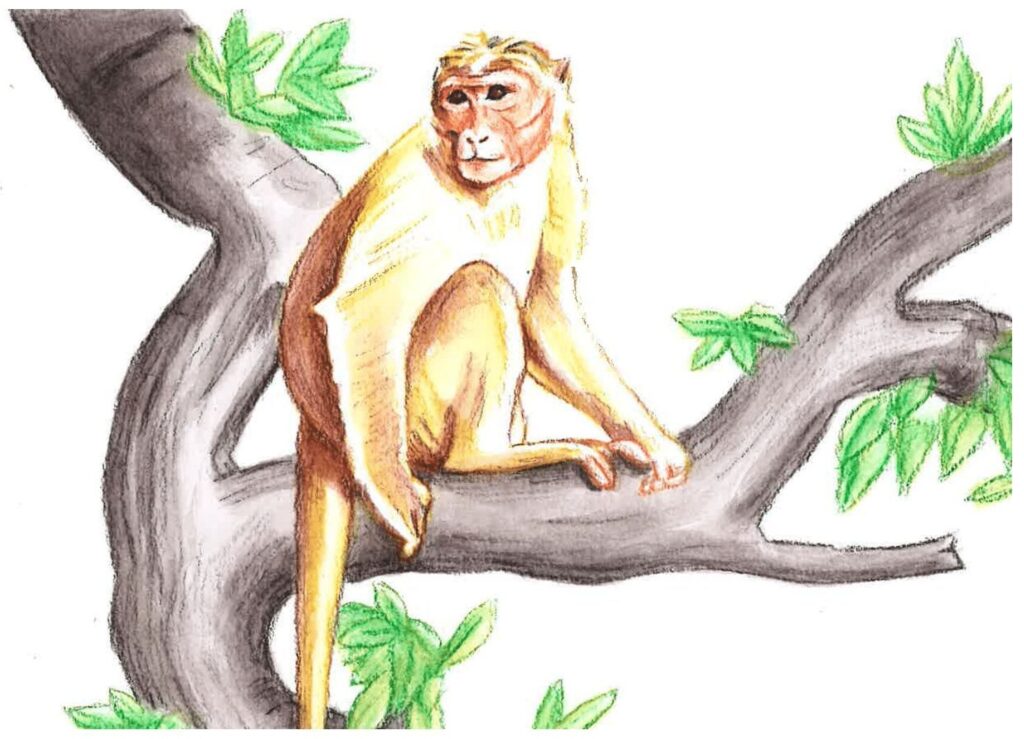
Animated by divine spirits, Bhatt’s pre-colonial India feels profoundly vivid and comes alive in the poem. Bhatt’s world is permissive: Pan was free to emigrate if he so chose and the great pantheon of Hindu gods are not confined to dusty books, or locked up in churches or temples, but can roam freely as they please. There’s no sense of danger in the poem, no hint that snakes might be poisonous, say, or monkeys might bite. The human and natural worlds intertwine with a mutual appreciation. While these ideas are rarely explicit, they hover under the surface of the poem and find their expression through form. Bhatt writes her poem in free verse, choosing not to confine her words in any particular rhythm or rhyme scheme, but to let them roam freely down the page. She uses enjambment so one line of poetry flows into the next without traditional end-stopping (punctuation at the end of lines) or capitalisation of headwords. For example, the sentence every tree is sacred and it is a sin to be rude to a book runs across three short lines unbroken by pause or punctuation. While she asserts an idealistic vision of India, Bhatt’s tone is not heavy or preachy. Rather, she uses sounds playfully to evoke something of the wonder of a world still in touch with its spiritual side. The first lines of the poem are arranged around two prominent sounds that interact pleasingly with each other: a silky sibilant S that conveys something of the snake’s sinuous slither, and guttural Gs and Cs that evoke the monkey’s playful bouncing. Look how guttural and sibilance run back and forth through the sentence Here the gods roam freely disguised as snakes and monkeys. (As the first verse lengthens, gutturals fall away slightly while softer sibilant sounds continue to rest on our ears as light fingers rest on the precious paper of a book: every tree is sacred and it is a sin… it is a sin to shove a book aside… a sin to slam… a sin to toss one carelessly across a room.)
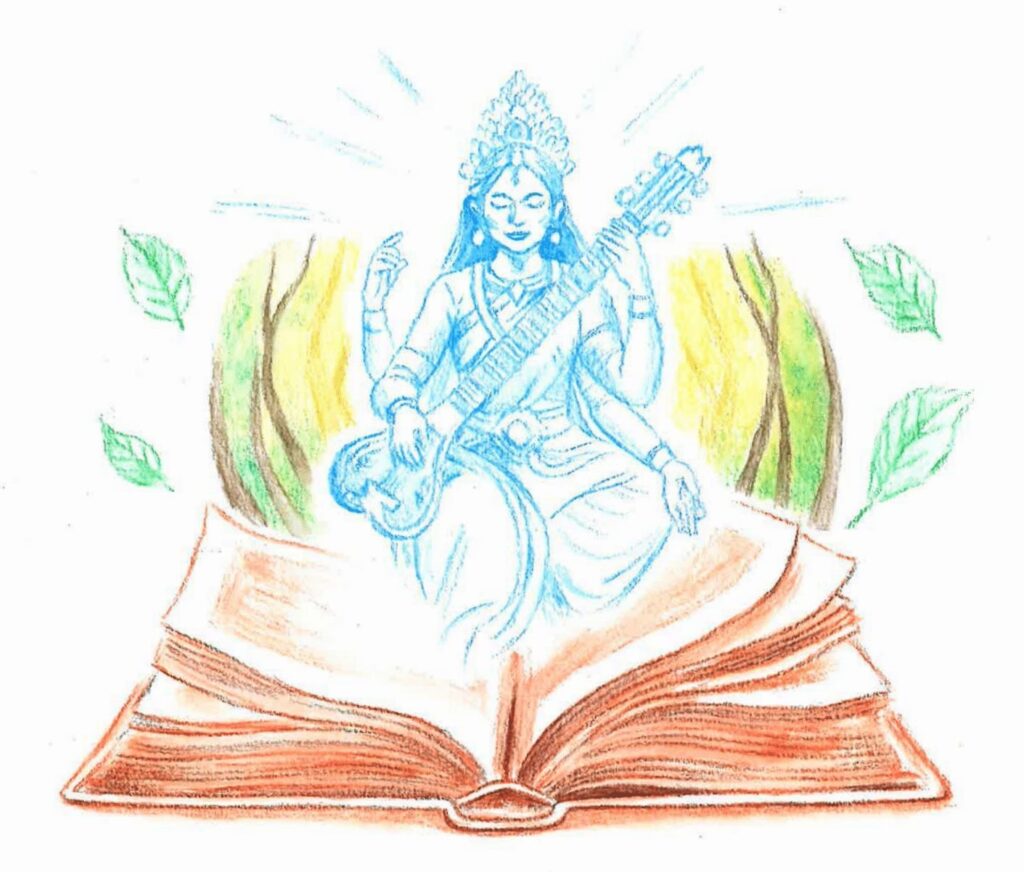
When it comes to books, Bhatt reveals how values and beliefs can be reflected in small, day-to-day actions and behaviours. The book is the poem’s clearest symbol, standing for more than just itself and reminding us that, while we may live in materialistic cultures, ironically, we often don’t think very much about materials themselves. Bhatt reconnects books with paper that comes from trees, so they retain their own life force (implied by the word sacred). Sarasvati, a principle Hindu goddess of knowledge, music, language, and culture (often depicted as a woman seated beside a river, or in a forest glade, holding a long-necked sitar) animates trees, so between the pages of a book reside all the things Sarasvati stands for. If people value language, history, nature, and so on it stands to reason that they would handle books with reverence. You must learn how to turn the pages gently employs strong modality to convey how, in traditional Indian culture, one must respect even inanimate objects. To do otherwise is a sin, repeated three times to highlight its significance. We normally use the word sin in the context of serious moral or religious failings, yet here, there’s something sinful in the careless treatment of humble books.
However, it’s clear that not everybody treats books with the reverence that they deserve, and it’s here that the poem begins to get a little more complicated. Whether a representation of European colonisers, or a victim who arrived in India as a refugee, Pan was not the only one to come to India’s shores. While never directly stated in the poem, the history of colonialism in India is a palpable tension that undercuts the idyllic depiction of India in the first verse, before becoming more explicitly clear in the second. As a symbolic representation of Indian culture, belief, religion and language (remember, Sarasvati resides in the trees from whose wood the paper is made, creating a link from a simple book to Indian culture and religion), the mistreatment of books symbolises the mistreatment of an entire nation by the British Empire, who ruled India from the mid-18th century to 1947. The idea of being rude to and offending Sarasvati personifies books with a living spirit that represents India. Crude, brutish actions that disturb Sarasvati are magnified through words that verge on violent: slam, shove, toss all contain a hint of onomatopoeia that not only disturb the poem’s tranquility but represent the disrespect shown by colonial occupiers to Indian culture and tradition. The almost-violence of these actions is magnified through adjectives and adverbs (down hard, carelessly, across a room) and through words like rude, foot, hard, and down Bhatt gives us frequent monosyllabic words edged with sharp consonance: in the four words listed here, repeated dental Ds and Ts effectively convey not only the actions themselves but the speaker’s own displeasure. Only when the proper reverence and respectful attitude is observed and books are treated more gently does a softer pattern of sound reassert itself: the first verse closes out in a lattice of fricatives (without, without, Sarasvati, offending, from) and sibilance again. The final line, from whose wood the paper is made, contains low and delicate sounds (long assonant O and A, quiet consonants like M and W) the words seem to fade softly, reverentially into the air.
If the first verse largely depicts an India in which Hindu beliefs were left in peace to guide culture, the second verse more directly acknowledges the impact of colonial rule. Gone is the tranquil Arcadian paradise of playful monkeys, sacred forests, and careful, wise book lovers, all destroyed in the space between verses one and two by rapacious invaders. While the word ‘colonialism’ never appears in the poem, nevertheless, the diction of the second verse – oppressor, conqueror, torture, murder – alludes unmistakably to the colonial period of the Raj under British Empire rule. The second verse also more clearly embraces an important theme of the poem, which is the use of language as a tool of oppression (the oppressor’s tongue) Again, the word ‘English’ is never directly stated in the poem; nevertheless, the questions Bhatt asks about the use of language to murder, oppress, and torture allude to the lamentable policies of the Raj under which the diverse languages of the Indian continent were pushed aside by the British Empire’s dominant language. Bhatt represents this through the image of a long scythe swooping out of the conqueror’s face and the phrase soul has been cropped. While ‘cropping’ relates to the cutting of wheat or grass down to the root, a scythe is the tool used by the Grim Reaper (lord of death) to harvest dead souls. Here, it’s not exactly people he’s coming for but religious beliefs (such as the pantheon of gods), different ways of thinking about the world, and language itself, something so important to the character of a nation and its people that Bhatt calls it the soul. The placement of the image (Bhatt has the scythe lashing out from the conqueror’s face) resembles a wickedly pointed tongue, making it a representation of harmful language policies that replaced a polyphony of Indian languages with the mandated use of English in administering the country from afar. (Aside from language, colonial policy impacted every aspect of Indian life: social, economic, political, religious: the idea that colonialism is responsible for the murder of the vibrant place we saw in verse one is discussed at length in this excellent and nuanced article that I encourage you to read alongside A Different History.)

Tonally, the second verse is a complete departure from the first. Whereas in the first verse, sibilance was used to evoke the calm of nature, or the slight rustling of paper books as pages are gently turned, in the second verse sibilance recreates the violent swooping of the long scythe, bringing an auditory dimension to the murderous imagery. While in verse one gutturals were light and playful, now hard C, K and G sounds associate with words like conqueror and cropped, a word which also features a sound called plosive. Made with the letter P, plosive is a hard, impactful sound that reoccurs in the words oppressor, happen, and swooping. Bhatt brings dental T into play through the words tongue, truly, after, and, most painfully, torture. Made by touching the tongue to the back of the upper teeth, dental can be light and playful or more impactful, depending on the circumstance. Through words such as torture dental certainly takes on a difficult edge compared to the lightness of verse one. Even the white space of the page around the poem is used to highlight the departure from the opening verse’s harmonic vision as Bhatt presents the second verse using an indent to offset the lines (using the layout of words on the page to create effects is also known as using spatial form), creating a visual contrast between pre- and post-colonial India.
While the poem begins by considering the fate of gods and the path of religion, as the poem ends Bhatt moves to more intimate concerns and wrestles with her own identity as an Indian writer who uses English. Born in Gujarat, India, as a young girl Bhatt was sent to school in the US where she received her education in English. After returning to India, while speaking Gujarat often, she still attended schools that taught in English. In interviews, Bhatt has spoken about her bilingualism: “I write in English because English became my language. My native language is Gujarati… so I’ve used both languages in some poems, but I really feel that English is my language, as it is for many other writers from India.” Because of the intersection of her own life with the forces of history, Bhatt paradoxically finds herself using the oppressor’s tongue: English. In some sense, this allows her to step back from history and take a broader view of the sad pattern of human history: all languages, at some point in time, have been spoken by those who commit violence, oppress, displace, murder against others. Once again, that faint personification Bhatt wields so effectively (Which language truly meant to murder someone?) plays a part: It’s not language that’s to blame, Bhatt implies, but those who choose to weaponise language against other people, as if the language itself is an innocent dupe misled into murder and torture.
The stark difference between verses one and two is, to my mind, the most challenging aspect of A Different History and it can be hard to reconcile the two halves of the poem. The jump from a descriptive evocation of an imagined/forgotten/lost India to the questioning of the role of language in dismantling an entire culture can feel abrupt. In this regard, don’t be afraid to go back to basics, noting Bhatt’s use of repetition in verse one compared to verse two. While repetition can be subtle, hypnotic or poignant, it can also be direct, sending us a clear signal as to what is worth paying attention to. In verse one, Bhatt repeats book(s) three times; this is paralleled by repetition of the word language three times in the second verse and the use of the word tongue as a reiteration of the same theme. Ultimately, whether written in a book or spoken out loud, A Different History is a poem about language itself. Having come to love this strange language, Bhatt wields what was, in her grandparents’ time, a tool of destruction as an implement of creation instead, hopefully crafting a different history for her own unborn grandchildren.
Suggested poems for comparison:
- Muliebrity by Sujata Bhatt
I wrote about this poem several years back. After many years away from her birth country, Sujata Bhatt remembers the image of a girl collecting cow-dung outside a temple in India. But she hasn’t known what to do with this image… until writing this poem.
- In the Bazaars of Hyderabad by Sarojini Naidu
Written by a famous Indian poet, this poem evokes the sights, sounds, and smells of a typical Indian marketplace full of hustle and bustle, colour, and tradition, bringing to life the craftsmanship and culture of India in a series of vivid descriptive images.
- An Introduction by Kamala Das
This is a perfect companion-poem for A Different History and is the poem that put Das on the map as a new voice in Indian poetry. Like Bhatt, Das is interested in reconciling India’s past and present and questions the language she uses to write: “I speak three languages,” she says here, “write in two, dream in one.”
Additional Resources
If you are teaching or studying A Different History at school or college, or if you simply enjoyed this analysis of the poem and would like to discover more, you might like to purchase our bespoke study bundle for this poem. It costs only £2.50 and includes:
- Study questions with guidance on how to answer in full paragraphs.
- A continuation exercise to help you practise analytical writing.
- An interactive and editable powerpoint, giving line-by-line analysis of all the poetic and technical features of the poem.
- An in-depth worksheet with a focus on explaining single word repetition in the poem.
- A fun crossword quiz, perfect for a starter activity, revision or a recap – now with answers provided separately.
- A four-page activity booklet that can be printed and folded into a handout – ideal for self study or revision.
- 4 practice Essay Questions – and one complete Model Essay for you to use as a style guide.
And… discuss!
Did you enjoy this breakdown of Sujata Bhatt’s poem? What do you think are the answers to the questions she poses in the second verse? Do you have any useful knowledge about Pan or Sarasvati that others might be interested in knowing? Why not share your ideas, ask a question, or leave a comment for others to read below.