 Posted by
 Nurture trumps nature in Elizabeth Brewster’s austerely beautiful poem
“Her poems vibrate in both time and a timeless zone where the voices of past and present are simultaneously distinct and one.”
Susan McCaslin, writing for The British Columbia Review
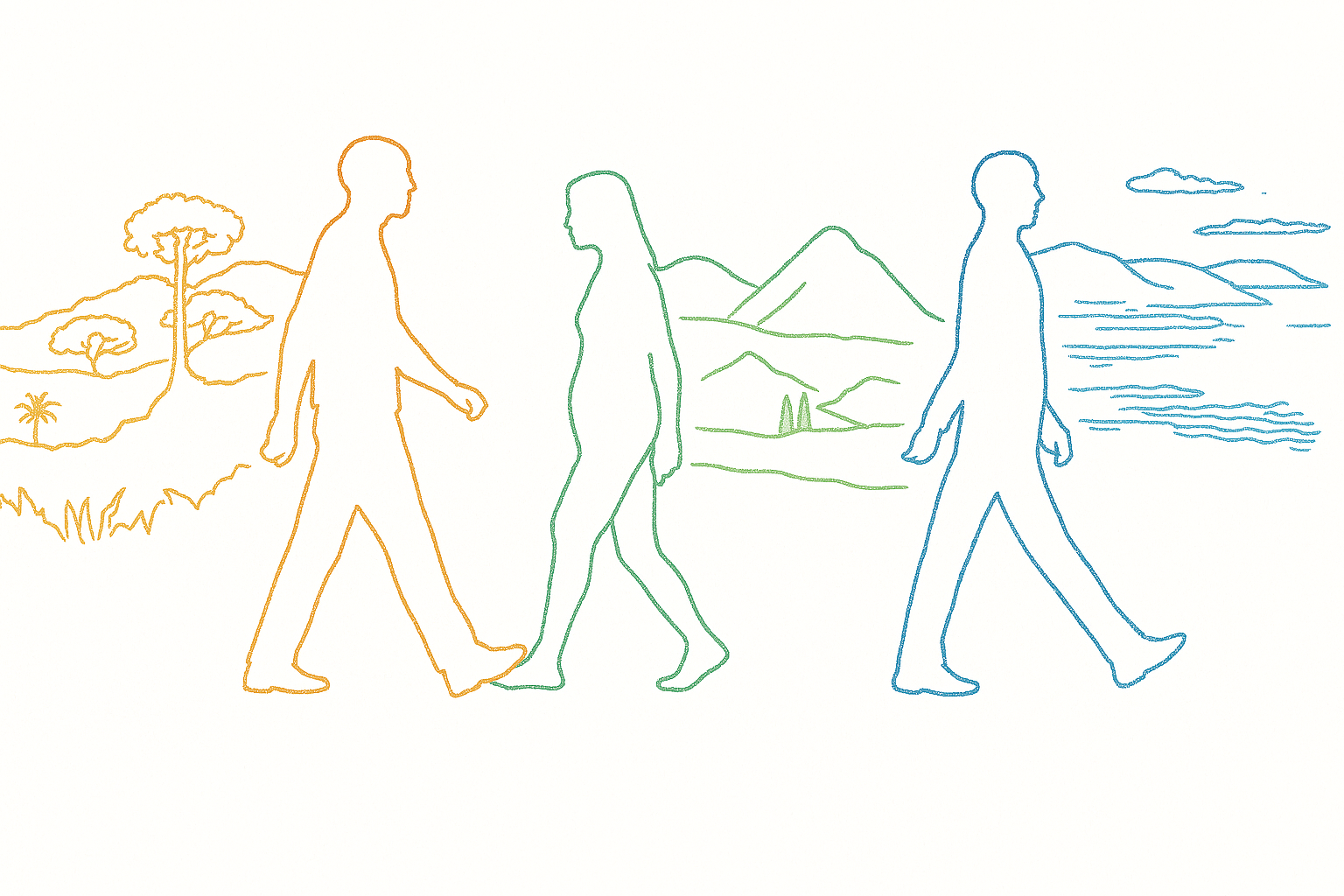
Nature or nurture? A common debate in psychology asking the perennial question: are we born this way or do we become who we are because of the world around us? Today’s poem comes down firmly on the latter side. From the very first line Elizabeth Brewster sets out her stall: we are all ‘made of places’. Exploring the connection between the places we’ve lived and the people we become, Brewster believes that a person’s childhood environment leaves a lasting impression on a person’s sense of self, and how they project that sense to others:
People are made of places. They carry with them
hints of jungles or mountains, a tropic grace
or the cool eyes of sea-gazers. Atmosphere of cities
how different drops from them, like the smell of smog
or the almost-not-smell of tulips in the spring,
nature tidily plotted in little squares
with a fountain in the centre; museum smell,
art also tidily plotted with a guidebook;
or the smell of work, glue factories maybe,
chromium-plated offices; smell of subways
crowded at rush hours.

                       Where I come from, people
carry woods in their minds, acres of pine woods;
blueberry patches in the burned-out bush;
wooden farmhouses, old, in need of paint,
with yards where hens and chickens circle about,
clucking aimlessly; battered schoolhouses
behind which violets grow. Spring and winter
are the mind’s chief seasons: ice and the breaking of ice.

A door in the mind blows open, and there blows
a frosty wind from fields of snow.
Brewster begins her poem with an arresting idea: People are made of places so they will always carry a little of the world around with them. You are the sum of the places you’ve been. In her first line, she makes an association between a person’s identity and where they’ve lived through alliteration; the letter P links people and places strongly together, as the sound of one word intermingles with the other. The first three lines expand and develop this premise by taking us on a tour of grand landscapes, all very different from each other. Whether an imposing mountain range, jungle vista, tropic island, or sea stretching to the horizon as far as the eye can see, the character of a place expresses itself somewhere in the character of the person. Using the word hints, Brewster imagines this as a subtle expression, not overt, nothing to do with clothing, skin colour, or any physical feature like that. More, she’s not suggesting an old sea hand will be a ‘deep’ person, or a mountain dweller ‘hard’ – nothing so direct. Rather Brewster imagines something ineffable in the way a person might gaze outwards, or might hold their posture (grace) as a sign of their history. Call to mind the briny sharpness of the sea wind, waves foaming on sand, the layered complexity of a jungle canopy, a mountain’s patient toughness, or the jagged edge of a rocky ridge. It’s in the qualities of a person felt, rather than seen, that one can faintly detect the marks of lived experience.
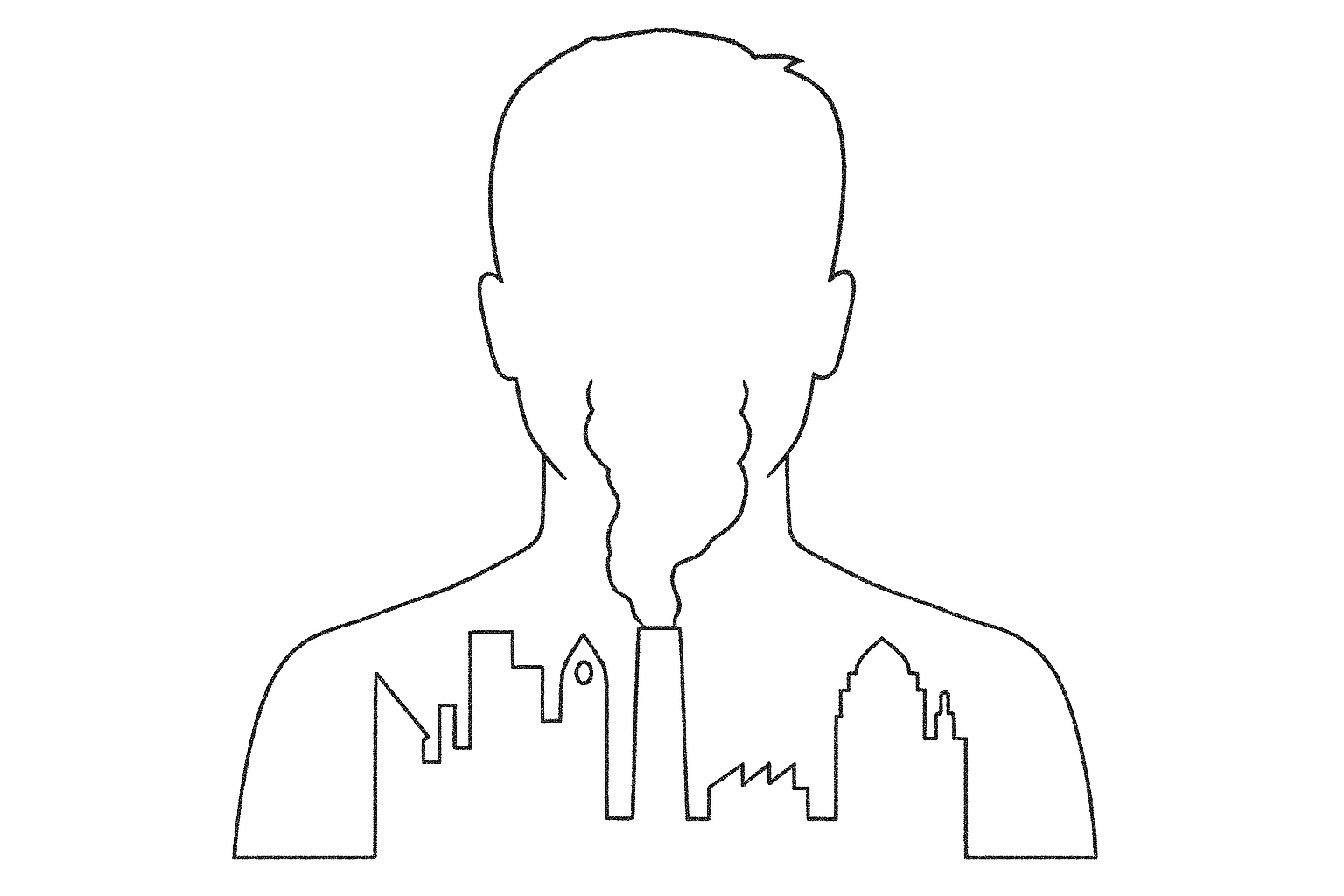
After this tour of far-flung landscapes, almost reluctantly, Brewster brings us to visit a very different kind of place: the urban environment. Like the ocean or great forests, cities too leave an indelible impression. But unlike great natural landscapes which penetrate deep inside, atmospheres of cities cling to people more superficially, like off-putting smells, a word Brewster repeats until you wrinkle your nose in distaste. A series of olfactory images make cities feel redolent and clammy. Sweat lingers in the smell of work, crowded subways reek with commuters; acrid and industrial smells of smog and nearby factories (glue factories maybe, Brewster speculates) spread in a pall over the city. In this context, even museum smells come across as stale and musty. Brewster undercuts everything with a persistent, sibilant hiss that accentuates the moribund, greasy images: atmosphere of cities… smell of smog… museum smells… smell of subways… rush hours… all give off the sharp tang of sibilance like a sour note hanging in the air. By the end of the verse, it’s hard to detect the qualities that city people carry with them. There’s no hint of grace or of cool calm in Brewster’s city citizens. Instead, while city atmospheres surround people stiflingly, they fail to penetrate and leave no lasting mark on the quality of people’s character beyond a faint, unpleasant odour that drops in their wake.
Through accentuating how unnatural cities have become, Brewster comments on the effect of urbanisation on the soul and psyche of our collective humanity. Since 2007, more than 50% of people in the world have lived in cities, in planned, shaped, and unnatural environments, places that plot out every last detail of what to do, where to go, and how to live. If we accept the basic premise of the poem, that people are made of places, there must be a cumulative impact of so many people living in such lifeless, soulless environments. Through a conspicuous repetition of the phrase tidily plotted, Brewster suggests how restrained and constraining city life can be. Nature has no way of expressing itself besides what is permitted by unseen city planners. Natural features and decorative items become symbols of artificiality; art is confined to a museum, a fountain is carefully positioned at the centre of a little square, and plasticky tulips seem subdued, the flowers giving off an almost-not-smell that fails to pep up the flat atmosphere. People are not only disconnected from nature but are themselves constrained in similar ways. When not scurrying to-and-fro on subterranean subways, they are penned up inside chromium plated offices; visually imposing, flashy and stylish, but clad in mirrored chromium that deflects the sun away. Lives are lived according to routines and schedules: factories work to shifts, subways run on timetables, office hours rule inside those chromium towers. A potent symbol of this overly plotted, restrained world is the guidebook used by visitors to the museum. Relying on a guidebook represents simply following a prescribed route to look only at recommended artworks. It’s convenient and easy – and it eliminates the possibility of finding something new just for oneself or feeling the thrill of discovery. If people are made of places, Brewster thinks, then people who live in such prescribed environments find themselves lacking in qualities of creativity, spontaneity, and imagination as might be gained if they lived somewhere less constrained.
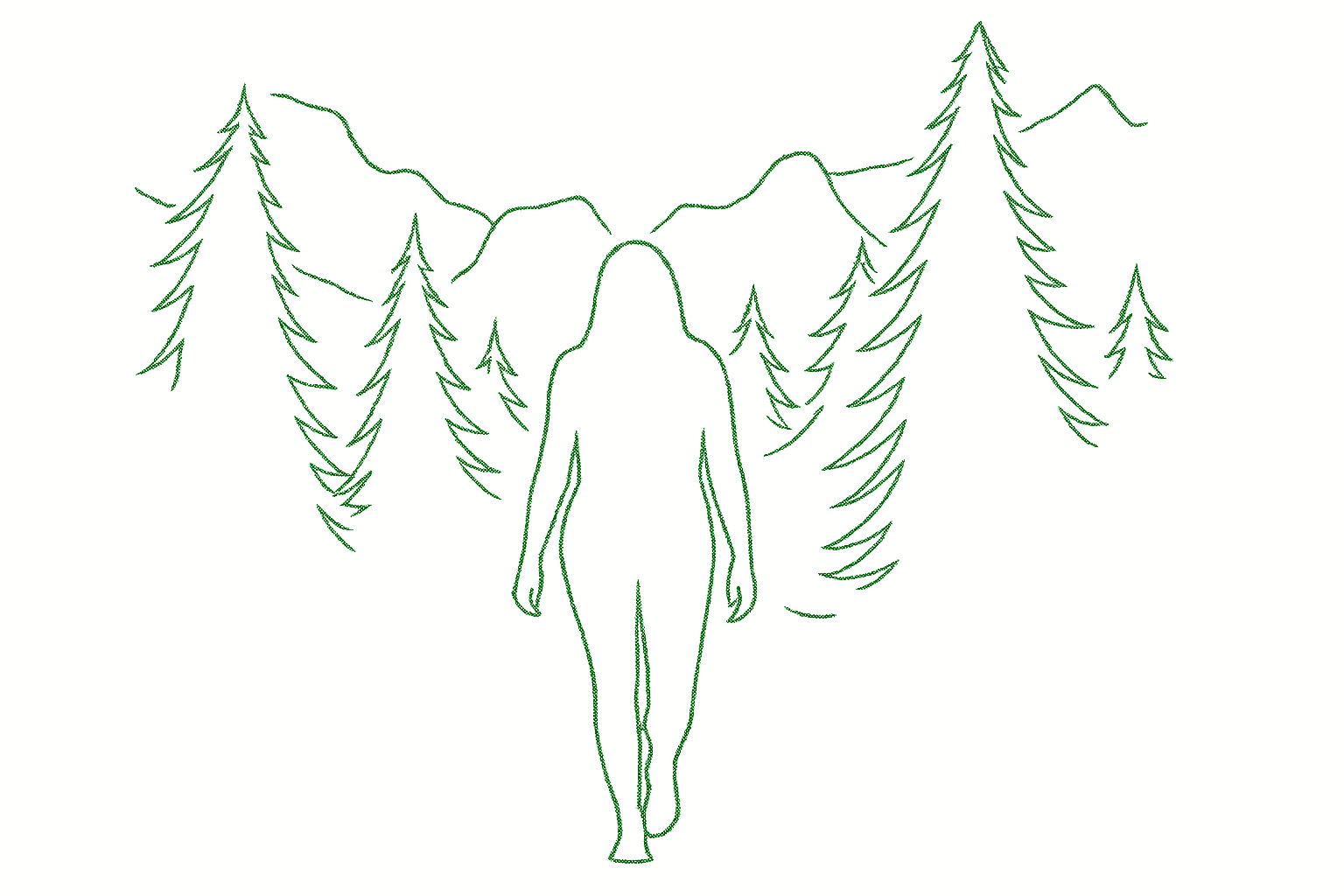
You probably won’t be surprised to discover that Brewster was not a city gal! Born in 1922 in Chipman, New Brunswick, she grew up in a remote Canadian logging town, pine forests and mountains blanketing her horizons. In Brewster’s lifetime she published twenty books of poetry, many hearkening back to rural eastern Canada (her 1951 collection was called East Coast, for example). In verse two, she leaves the built city environment behind and teleports us away as far as possible, to the place of her childhood. Where I come from… the second verse begins and, somewhat thanks to the repetition of the poem’s title, you can almost hear the nostalgia sing from the page. The word woods repeats twice in the first couple of lines, and a caesura (white space) that indents the start of the second verse creates a physical partition between urban and rural worlds. While it looks like the two parts of the poem should interlock like puzzle pieces, it actually feels as if they’re breaking apart like continents drifting in opposite directions. Where atmospheres of cities surround, stifle, yet ultimately drop away – too superficial to make a lasting impression – by contrast, the woods of Brewster’s childhood (acres of pine woods) grow their roots deep into the soul, so that people carry woods in their minds with them forever after.
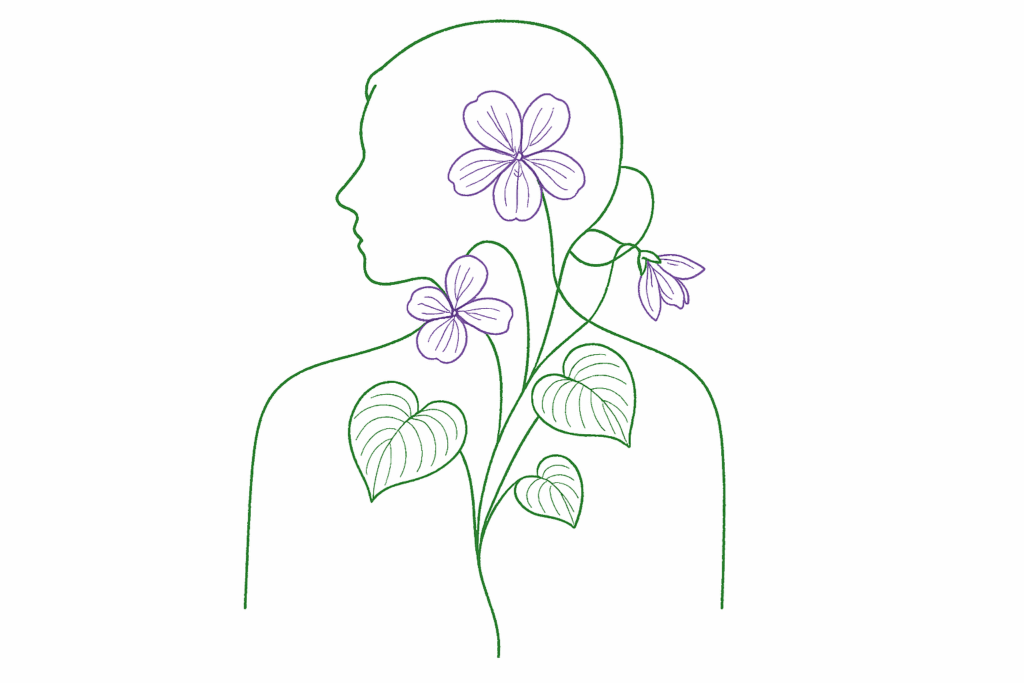
And from here on, the poem really is all about contrast as Brewster describes a rural place that couldn’t be more dissimilar to the urban world we’ve just left. Where city life feels small (little squares) and confined, the country is open and expansive (acres of woods, fields of snow, plentiful yards) Where the city is tidily plotted within an inch of its life, here natural things reclaim the spaces denied them in the first verse. Blueberry patches recolonise burnt stubble, and violets grow behind a schoolhouse that’s on its last legs. There’s still a human touch evident in the schoolhouse and in the old farmhouse, but we’re a world away from those sleek chromium skyscrapers. In Brewster’s memory, her town buildings are humbly constructed from natural materials (wood echoes strongly in the word wooden) and despite being utilitarian, leave a little room for nature to creep back in. The buildings have both seen better days (old, in need of paint, battered) and the way they seem to have fallen into disuse hints at the phenomenon of urban migration whereby younger generations abandon rural villages to seek a better, more glamorous life in big cites. As well as suggesting they might not find it in verse one, here Brewster reminds us of the beauty left behind. The scene in verse two may be dilapidated and rundown, but there’s also a stark beauty in flowers reclaiming forgotten niches and wooden beams showing through decades-old paintwork. A subtle alteration to her imagery conveys this beautifully: gone are the flat, almost-not-smells of the city. Olfactory impressions now fill the nose with the scent of fresh pine needles, or a hint of lingering woodsmoke from those burnt out bushes. More, sensory imagery in verse two goes beyond smell; in images of blueberry patches and violets we’re given colour, sweetness, and light.
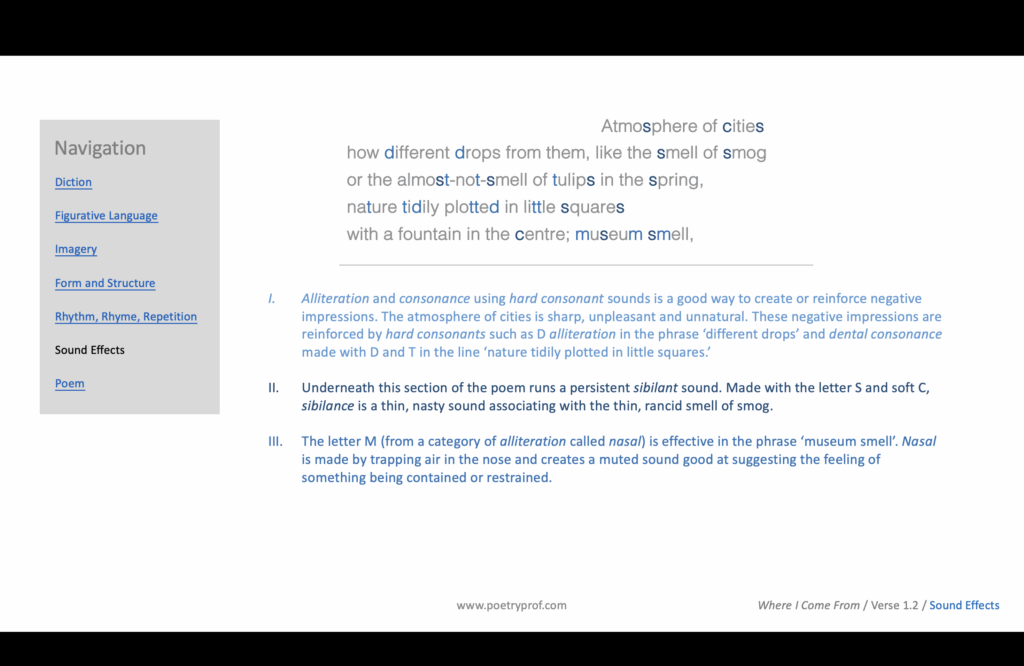
The rural scene is not only pretty, but the sense of rigidity and routine, of having to follow tight schedules falls away. Here, life moves freely, even aimlessly, as symbolised by some friendly hens and chickens who circle about clucking contentedly to themselves. A strange impression in verse one was an almost surreal lack of movement, despite those crowded trains at rush hour. Brewster wrote in a pared-down way using as few verbs as possible, so the city felt curiously empty and still. Only drops, plotted, and maybe crowded are words that could be accused of having any verve at all, but I’d argue they are still quite restrained. Shifting to the beaten-up town on the edge of the forest, Brewster’s language is more kinaesthetic: carry, circle, clucking, grow, breaking, blows open are all words that unlock the stillness of the scene and add a sense of movement. Where the city seemed suspended in a purgatorial grey smog, the cycle of winter and spring, ice and the breaking of ice, shows us time passing in a world that still moves to natural rhythms. This contrast extends to patterns of sound (alliteration and consonance) as well. Whereas the city scene was characterised by thin sibilance, here stronger plosives made with the letters B and P (blueberry patches in the burned out bush) and gutturals made with hard C and K (chickens circle about clucking aimlessly) help accentuate the pulse of life that beats at the heart of Brewster’s rural setting.
That’s not to say Brewster overly romanticises rural living. Indeed, through the rundown state of the town, those hard sound effects, and diction including words such as burnt, old, battered, and the necessary breaking of ice on a freezing winter’s morning there’s an acknowledgement of the hardship that rural life entails. The chief seasons are winter and spring, suggesting life is lived mostly in the cold and dark, while spring comes as a fleeting relief before the work of preparing for the next snow begins all over again. But, especially through the image of the breaking of ice implying breaking through a barrier, Brewster implies that this kind of life instils a certain grit and determination in those who live it. There’s no convenient guidebook to follow in verse two, that’s for sure! If people are made of places, the inhabitants of this remote, rural town must be doughty, independent, hardworking folk.
Finally we come to the very short third verse and a surreal image relating back to the central thesis of the poem: that people are made of places. By this point in the poem, Brewster completes her journey from the general (the poem opened by discussing people in general) to the specific by revealing an image that’s entirely personal to the writer. Crossing the years from her own childhood, a frosty wind blows open a symbolic door in the writer’s mind, bringing back still-vivid memories of winter from long ago. Emphasised by rhyme (blows/snow) the close of the poem shows us what Brewster’s made of, that quintessential ‘something’ more felt than seen: a capacity to endure hardship, an appreciation of nature’s austere beauty, a mind that’s open to inspiration. The poem’s final image rejects the common associations of winter with loneliness, isolation, hibernation, and so on – in Where I Come From, winter’s icy cold is the source of the poet’s identity and the shaping force of her soul.

Suggested poems for comparison:
- When I Am Old by Elizabeth Brewster
Carrying on the theme from today’s poem, here Brewster imagines being able to live ‘with the voice of two oceans/ with the voice of the prairie wind/ the caw of crows/ and seagulls screaming‘. Unperturbed by questions of her legacy, Brewster desires to simply let go into the natural world again.
- Crossing a City Highway by Yusef Komunyakaa
An electric poem from Louisiana that surges from the page, dealing with themes of urbanisation and the psychic cost of living in a built-up environment, this poem is a brilliant companion piece to Where I Come From. Follow a coyote as she timidly tries to cross a highway at night – when a gigantic eighteen wheeler comes crashing through…
Additional Resources
If you are teaching or studying Where I Come From at school or college, or if you simply enjoyed this analysis of the poem and would like to discover more, you might like to purchase our bespoke study bundle for this poem. It costs only £2.50 and includes:
- Study questions with guidance on how to answer in full paragraphs.
- A continuation exercise to help you practise analytical writing.
- An interactive and editable powerpoint, giving line-by-line analysis of all the poetic and technical features of the poem.
- An in-depth worksheet with a focus on explaining symbolism in this poem.
- A fun crossword quiz, perfect for a starter activity, revision or a recap – now with answers provided separately.
- A four-page activity booklet that can be printed and folded into a handout – ideal for self study or revision.
- 4 practice Essay Questions – and one complete Model Essay for you to use as a style guide.
And… discuss!
Did you enjoy this breakdown of Elizabeth Brewster’s lovely poem? Do you agree with the analysis of the way she presents city life or rural living? How do you interpret the image of the door blowing open in her mind? Why not share your ideas, ask a question, or leave a comment for others to read below.



this is great! helped me understand the poem for my IGCSE exam.
You’re welcome – I hope you did well in your exams :o)
Well explained. Enjoyed reading this.
Thank you Jyothy, I enjoyed working on this poem too.